Residential structures in older Sacramento neighborhoods such as Midtown, Curtis Park, and East Sacramento feature architectural profiles, like vented crawlspace piers and California bungalows with open eave vents,…
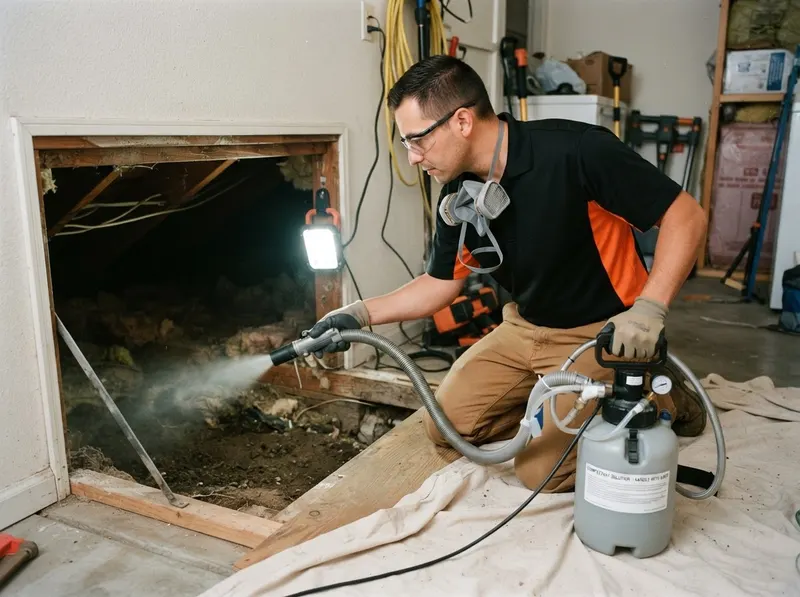
Residential structures in older Sacramento neighborhoods such as Midtown, Curtis Park, and East Sacramento feature architectural profiles, like vented crawlspace piers and California bungalows with open eave vents, that roof rats (Rattus rattus) and house mice readily exploit. Rodent urine deposits leave concentrated lipid residues, pheromone trails, and biological pathogens such as Leptospira, while rodent droppings crumble into microscopic airborne dust. According to the Centers for Disease Control and Prevention, sweeping or vacuuming dry rodent waste without wet decontamination aerosolizes biological agents that migrate into indoor living spaces through the stack effect. In homes built over raised foundations near William Land Park or the American River Parkway, subfloor air is naturally drawn upward into primary living zones through plumbing chases, subfloor gaps, and floor heater registers.
Structural remediation begins with negative pressure containment to prevent micro-particulate backdrafting into the living quarters. Technicians operating under Occupational Safety and Health Administration respiratory protection standards physically remove gross biological waste, soiled vapor barriers, and compromised fiberglass batts or loose cellulose. Vacuum systems route waste through certified true HEPA filters rated to trap 99.97% of particles down to 0.3 microns, meeting the filtration criteria established by the United States Environmental Protection Agency. In high-water-table zones like Pocket-Greenhaven and South Land Park, ground dampness accelerates fungal growth over rodent fecal matter, necessitating broad-spectrum bactericides, virucides, and fungicidal solutions registered by the California Department of Pesticide Regulation to break down uric salts and stop pheromone communication that invites re-infestation.
Decision guidance hinges on the severity and distribution of contamination across the sub-structure. When pest intrusion is caught early, such as localized nesting over an attached garage ceiling in Natomas or a single rodent run beneath a kitchen sink in Tahoe Park, a spot treatment and localized fogging protocol addresses the risk without whole-house insulation stripping. Conversely, when animal nesting extends through continuous runs of insulation or beneath damaged flexible ducting, whole-envelope removal becomes structurally necessary. Uninsulated crawlspace soil also demands the replacement of torn 6-mil polyethylene ground sheeting in compliance with the California Energy Commission Title 24 standards, which prevents soil gas and moisture from saturating joists while keeping biological odors from penetrating hardwood floors. Property owners in Oak Park experiencing localized rodent activity can reach Summit Pest Protection by phone at (916) 674-7009 or text a photo for a quote.
Every job gets a firm, written price after a free on-site visit.
For standards, safe disposal, and service guidance on PEST CONTROL SEVICE in Sacramento, CA, useful references include U.S. EPA, ENERGY STAR, U.S. Dept. of Energy, Consumer.gov, U.S. Census Bureau, and Google Maps. General consumer and small-business resources are available from USA.gov, Better Business Bureau, FTC Consumer Advice, U.S. Small Business Administration, and Ready.gov.
Tell us about your crawlspace and attic sanitization job in Sacramento and we'll send a clear, written quote, usually the same day.
 Summit Pest Protection